
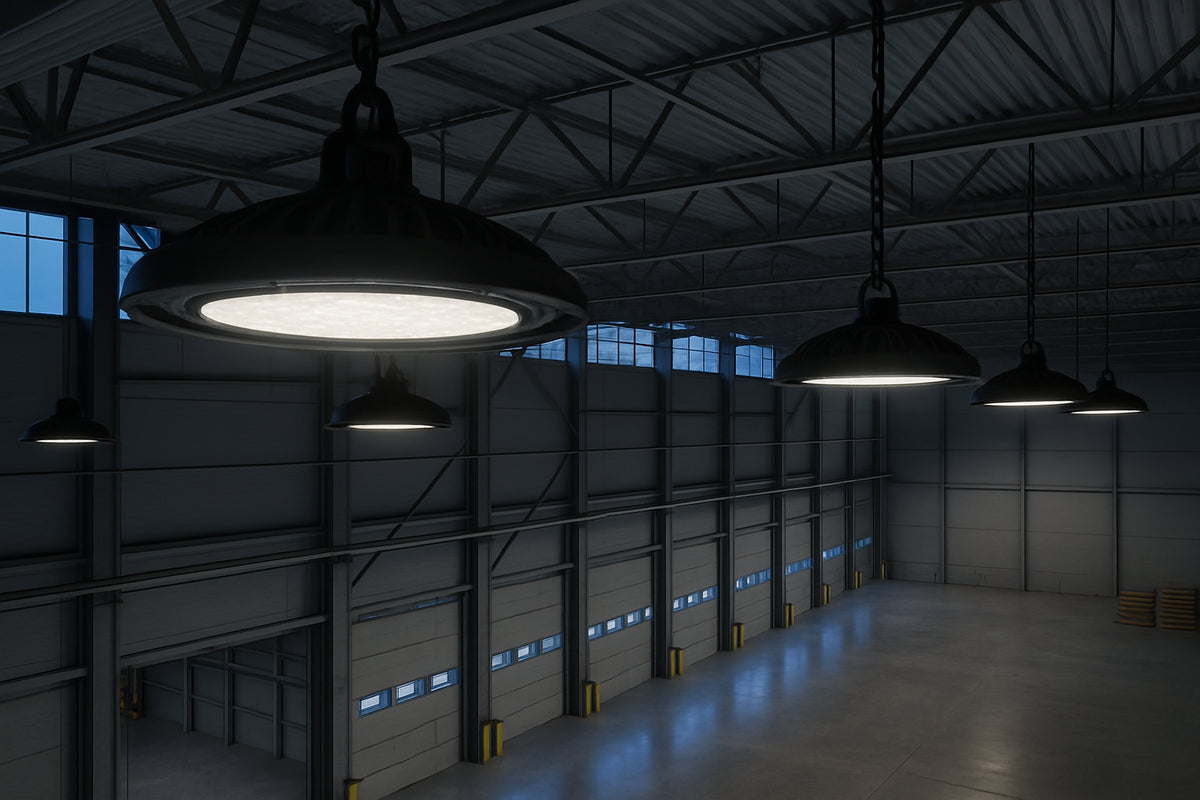
Understanding Warehouse Lighting Requirements
Industrial facilities demand precise illumination to ensure safety, productivity, and compliance. Warehouse managers and lighting specifiers face a critical decision during retrofit projects: choosing between round and linear LED high bay fixtures. This choice impacts initial costs, long-term energy consumption, and the quality of light distribution across the floor. The market for industrial LED lighting continues to evolve in 2026 with advancements in driver technology, thermal management, and optical control. Facilities must balance performance requirements with budget constraints as they plan upgrades for the coming year.
The physical layout of a warehouse dictates the optimal fixture selection. Aisles vary in width, ceiling heights range from twenty to sixty feet, and storage configurations change frequently. Specifiers must analyze these variables to determine whether a circular or rectangular light source best serves the operational needs. Round fixtures typically offer wider beam angles and higher lumen outputs per unit. Linear fixtures provide uniform coverage along narrow aisles and reduce dark spots between rows. Understanding these fundamental differences allows facility managers to make informed decisions that maximize return on investment.
Lumen Output and Efficacy Comparisons
Lumen output measures the total visible light emitted by a fixture. Efficacy describes the ratio of lumens produced per watt consumed. Both metrics matter when evaluating LED high bay options for large spaces. Round LED high bays often deliver higher lumen packages suitable for open floor areas or very high ceilings. They concentrate light into a broader cone, making them effective for general area illumination. Linear high bays excel in efficiency for row-based layouts. Their elongated shape allows for closer spacing without creating excessive overlap or waste.
Consider the specific application when comparing efficacy data. A round fixture might achieve one hundred and twenty lumens per watt while delivering ten thousand lumens. A comparable linear unit might offer similar efficacy but distribute those lumens differently across the work plane. Linear designs often maintain higher efficiency at lower wattages because they spread heat more effectively along their length. This thermal advantage can extend the lifespan of the LEDs and drivers over time. Facility managers should review photometric reports from manufacturers to understand how each fixture type performs under real-world conditions.
The MHB series represents a robust option for round high bay applications. These fixtures combine durability with high performance in demanding environments. They feature advanced thermal management systems that keep internal components cool during continuous operation. The housing design protects against dust and moisture ingress while maintaining an attractive aesthetic. For facilities requiring intense illumination over large square footage, the MHB series provides reliable output without compromising on longevity. Specifiers often choose these units for manufacturing floors or distribution centers with high ceilings.
Light Distribution Patterns
Light distribution determines how evenly illumination spreads across a warehouse floor. Uniformity ratios measure the consistency of light levels between the center and edges of an aisle. Poor distribution leads to hotspots and dark zones that compromise worker safety and visibility. Round fixtures typically use reflectors or lenses to shape their beam pattern. Common options include Type III, IV, or V distributions depending on the mounting height and desired coverage area.
Linear high bays inherently provide better longitudinal uniformity. Their shape aligns naturally with aisle directions in pallet racking systems. This alignment minimizes shadows cast by stored goods or equipment moving through the space. The MLH linear high bay series exemplifies this advantage with its sleek profile and optimized optic design. These fixtures deliver consistent light levels along long stretches of warehouse flooring. They reduce the number of fixtures needed compared to traditional round options in narrow aisle configurations.
Beam angle selection plays a crucial role in achieving desired distribution outcomes. Narrow beams focus light downward for precision tasks or high-ceiling applications. Wide beams spread light broadly for general ambient illumination. Specifiers must match beam angles to the specific geometry of their facility. Mounting height also influences distribution effectiveness. Higher ceilings require narrower beams to reach the floor with sufficient intensity. Lower ceilings benefit from wider distributions to avoid glare and ensure even coverage.
Mounting Height Considerations
Ceiling height significantly impacts fixture selection in industrial settings. Warehouses often feature ceilings ranging from twenty-five to fifty feet or more. Round LED high bays perform well at greater heights due to their ability to project light over longer distances. Their omnidirectional nature helps fill vertical spaces effectively. Linear fixtures may require additional units to achieve comparable coverage at extreme heights unless equipped with specialized optics.
Mounting methods vary between fixture types and structural configurations. Chain suspension works for most round high bays in open areas. Pendant mounts offer flexibility for adjusting height after installation. Surface mounting provides a streamlined look when ceiling structures limit hanging options. Linear fixtures frequently use track or rail systems for easy positioning along long runs. Some designs integrate directly into existing conduit runs to simplify electrical connections.
The MSL sports light series demonstrates versatility in high-mount applications. While primarily designed for outdoor venues, its principles apply to indoor high-bay scenarios requiring intense downward projection. These fixtures handle significant thermal loads while maintaining stable performance. Their rugged construction withstands vibrations and environmental stressors common in heavy-duty industrial zones. Facility managers looking for maximum reach and durability might consider similar high-output options for specialized areas within their warehouses.
Energy Efficiency and Cost Savings
Energy costs represent a major expense for commercial and industrial operations. Upgrading to LED technology reduces electricity consumption substantially compared to older HID or fluorescent systems. Both round and linear LED high bays offer impressive energy savings potential. The key lies in selecting the right fixture for the specific layout to avoid over-lighting or under-performing areas. Proper sizing ensures that every watt contributes meaningfully to workspace illumination.
Utility rebates often incentivize the transition to efficient lighting solutions. Many programs have deadlines tied to fiscal years or legislative cycles. Specifiers should check local utility provider guidelines for current offers on LED replacements. These incentives can offset upfront capital expenditures significantly. Planning retrofits around rebate windows maximizes financial benefits while improving operational efficiency.
Maintenance costs decrease with LED adoption due to longer lifespans and reduced failure rates. Fewer lamp changes mean less downtime and lower labor expenses. Round fixtures generally require fewer units per square foot than linear ones in open areas. However, linear fixtures might need fewer replacements in aisles where precise targeting matters more than broad coverage. Analyzing total cost of ownership helps justify initial investments in higher-quality components.
Thermal Management and Durability
Heat dissipation affects LED performance and longevity. Poor thermal management leads to premature lumen depreciation and driver failures. Round high bays often use die-cast aluminum housings with fins to increase surface area for cooling. These designs channel heat away from sensitive electronics effectively. Linear fixtures benefit from their extended shape which naturally spreads heat across a larger volume.
Ingress protection ratings indicate resistance to dust and water intrusion. IP65 or higher ratings suit industrial environments prone to debris accumulation or humidity fluctuations. Ruggedized housings protect against physical damage from forklift traffic or accidental impacts. The MHR hazardous location series highlights the importance of robust construction in extreme conditions. While intended for explosive atmospheres, its engineering principles apply to any facility prioritizing safety and reliability.
Corrosion resistance matters in coastal regions or chemical processing plants. Marine-grade finishes prevent oxidation and degradation over time. Powder-coated surfaces offer additional protection against abrasion and UV exposure. Selecting fixtures with appropriate environmental ratings ensures sustained performance regardless of external factors. Facility managers must assess their unique operational challenges when specifying durable lighting solutions.
Specification Tips for Specifiers
Creating accurate specifications streamlines the procurement process and avoids costly errors. Include detailed requirements for mounting height, beam angle, lumen output, and color temperature. Specify driver types such as DALI or 0-10V dimming if automation is part of the strategy. Clarify any necessary accessories like [accessory-mounting-kits] or photocells for outdoor transitions.
Request photometric data sheets from manufacturers to verify performance claims. Look for independent testing results that confirm efficacy and distribution metrics. Evaluate warranty terms carefully to understand coverage scope and duration. Compare multiple vendors based on technical merits rather than price alone. Quality components justify higher initial costs through extended service life and consistent operation.
Consider integrating smart controls to enhance energy management further. Occupancy sensors reduce power usage in unoccupied zones. Daylight harvesting adjusts artificial lighting based on natural light availability. These features contribute to sustainability goals while lowering utility bills. The [accessory-sensors] category offers various options for adding intelligence to traditional high bay installations.
Final Recommendations for Facility Upgrades
Choosing between round and linear LED high bays depends entirely on facility layout and operational priorities. Round fixtures suit open floor plans with high ceilings needing broad coverage. Linear fixtures optimize narrow aisles and long corridors with superior uniformity. Both options deliver significant energy savings compared to legacy technologies. Specifiers should conduct thorough site assessments before finalizing selections.
Consult with lighting professionals to model expected performance outcomes. Simulation tools help visualize light distribution patterns and identify potential issues early. Pilot installations allow testing of different fixture types in actual conditions. Gathering feedback from end-users ensures satisfaction with brightness levels and comfort.
As we move through 2026, staying current with technological advancements remains essential for competitive advantage. Regularly reviewing inventory needs and planning phased upgrades prevents sudden failures and budget shocks. Prioritize partnerships with reputable manufacturers who offer comprehensive support and documentation. Visit our [high-bays] collection to explore the full range of industrial lighting solutions available today.
Shop LED lighting at asd-lightingdirect.com or contact us for expert help choosing the right fixtures. All products include a 5 year warranty, and orders over $249 ship free.