The Shift Toward Continuous Run Aesthetics
Retail environments demand visual clarity and brand consistency. Shoppers respond to uniform illumination that highlights merchandise without creating harsh shadows or dark spots. Facility managers and specifiers now prioritize seamless lighting layouts over disjointed point sources. The traditional approach involved installing individual troffers or pendant fixtures at regular intervals. This method often resulted in visible gaps between light sources. These gaps create uneven distribution on the floor level and on display surfaces.
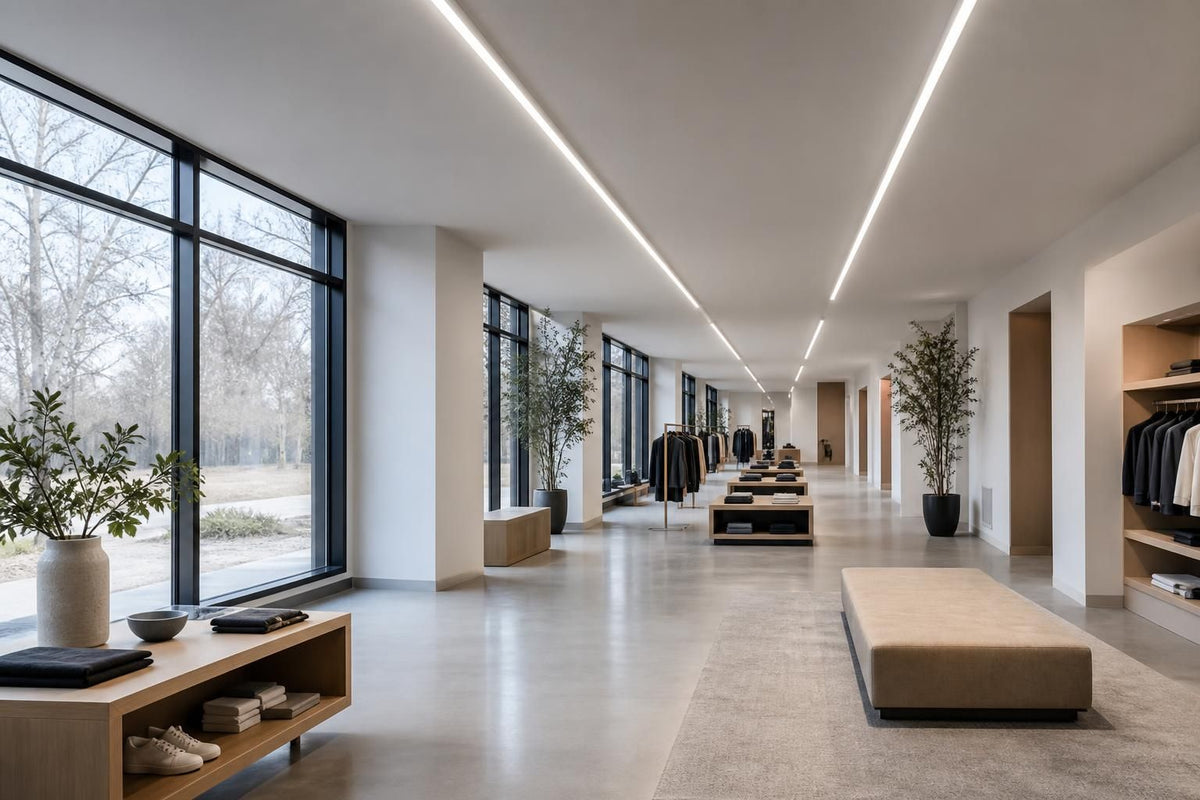
The industry has moved toward continuous run solutions. These systems provide a uniform line of light that spans entire aisles or perimeter walls. An LED lightbar kit continuous run setup transforms the ceiling into a cohesive design element. It removes visual clutter while maximizing lumen delivery to the sales floor. This approach aligns with modern architectural trends that favor clean lines and open spaces. Specifiers choose this method to reduce the number of required mounting points. Fewer fixtures mean simpler maintenance schedules and lower long term operational costs.
Continuous runs also offer superior control over light distribution. By spacing emitters evenly along a linear housing, manufacturers ensure consistent illuminance levels. This consistency is critical for retail applications where product color rendering matters. Customers need to see true colors to make purchasing decisions. High CRI LEDs combined with precise beam angles deliver this performance. The result is an environment that feels inviting and professional.
Technical Specifications for Linear Installations
Successful specification requires attention to detail. Mounting height determines the necessary wattage and beam spread. Retail ceilings typically range from ten to twenty feet in height. Lower heights require narrower beam angles to prevent glare. Higher ceilings benefit from wider distributions to ensure adequate coverage at floor level. Wattage density must align with local energy codes. Many jurisdictions have strict limits on watts per square foot for commercial spaces.
Lumen output remains a key metric. A standard retail aisle needs sufficient brightness to guide shoppers and highlight products. Dimming capabilities add another layer of control. Daylight harvesting sensors can reduce power consumption when natural light is abundant. This integration supports sustainability goals while lowering utility bills. Color temperature selection influences the perceived atmosphere. Warmer tones around 3000K create a cozy feel for boutique stores. Cooler whites near 4000K or 5000K enhance clarity for electronics or hardware retailers.
Ingress protection ratings matter even in indoor environments. Dust accumulation can reduce efficiency over time. Sealed housings protect internal components from particulate matter. Thermal management systems ensure LEDs operate within optimal temperature ranges. Proper heat dissipation extends the lifespan of the fixture and maintains consistent light output. Specifiers should look for fixtures with robust thermal design features.
Advantages of Lightbar Kit Configurations
Lightbar kits offer distinct advantages over standard linear fixtures. They are designed specifically for continuous installation. The kits often include end caps, connectors, and mounting hardware tailored for seamless integration. This simplifies the procurement process and reduces compatibility issues. Installers can connect multiple units without complex wiring modifications. The modularity allows for easy expansion or reconfiguration as store layouts change.
Maintenance becomes more straightforward with these systems. If one segment fails, technicians can replace only that section. This targeted repair approach minimizes downtime and labor costs. Standard linear fixtures may require full unit replacement in some cases. Lightbar kits also facilitate uniform aging. Because all segments share similar driver characteristics, lumen depreciation occurs evenly across the run.
The aesthetic benefit cannot be overstated. A continuous line of light appears as a single architectural feature rather than a collection of discrete units. This design choice supports brand identity and enhances the shopping experience. Customers notice the quality of lighting even if they do not consciously analyze it. Good lighting signals professionalism and attention to detail.
Integration with Smart Controls and Sensors
Modern retail facilities benefit from intelligent lighting systems. Occupancy sensors and daylight harvesting controls work seamlessly with continuous run fixtures. These technologies adjust output based on real time conditions. When a zone is unoccupied, the system dims or turns off the lights. This automation reduces energy waste significantly. Facility managers can monitor performance through integrated software platforms.
Data collection provides insights into usage patterns. Managers can identify areas of high traffic or underutilized spaces. This information supports decisions about layout changes or staffing levels. Remote monitoring capabilities allow for proactive maintenance. Technicians receive alerts before failures occur, preventing unexpected outages. Integration with building management systems creates a holistic approach to energy efficiency.
Utility rebates often incentivize the adoption of smart controls. Many programs offer financial incentives for installing connected lighting solutions. Specifiers should research available incentives in their region. These rebates can offset initial installation costs and improve return on investment timelines. Staying informed about program deadlines ensures maximum benefit capture.
Addressing End of Year Budget Cycles
Capital planning often intensifies as the year concludes. Many organizations operate on fiscal calendars that end in December or June. Unspent budget allocations may need to be deployed before the cycle closes. This timing presents an opportunity for facility upgrades. Specifiers can accelerate procurement processes to take advantage of remaining funds.
Utility rebate programs also feature annual deadlines. Missing these windows means forfeiting potential savings. Coordinating installation schedules with rebate applications requires careful planning. Early engagement with utility providers ensures compliance with documentation requirements. Submitting complete applications ahead of deadlines prevents administrative delays.
End of year promotions from manufacturers can further enhance value. Discounts on bulk orders or accessories might be available. Specifiers should review current catalogs and pricing structures. Comparing options across different vendors helps identify the best financial opportunities. Strategic timing can turn necessary upgrades into highly cost effective projects.
Selecting the Right Fixture Family
Forge Light Co offers a comprehensive range of commercial lighting solutions. The Linear High Bays collection provides versatile options for retail applications. These fixtures deliver high efficiency and excellent light quality. They are designed for easy installation and long term reliability. For specific continuous run needs, the lightbar kit configurations stand out as optimal choices.
Specifiers should consider the total cost of ownership. Initial purchase price is only one factor. Energy consumption, maintenance frequency, and lifespan all contribute to overall expenses. High quality LEDs reduce replacement cycles and lower electricity bills. Investing in superior technology pays dividends over the fixture lifetime.
Compatibility with existing infrastructure matters as well. Some older buildings may require voltage conversions or additional wiring. Accessories like Accessory Mounting Kits simplify integration into diverse ceiling types. These kits ensure secure attachment and proper alignment. Professional installation guarantees optimal performance and safety compliance.
Final Considerations for Specification
Choosing the right lighting solution requires a balance of aesthetics, functionality, and economics. Continuous run systems represent the forefront of retail lighting design. They offer unmatched uniformity and visual appeal. Facility managers who adopt these technologies position their properties for future success. The combination of energy efficiency and smart controls delivers measurable savings.
Staying ahead of industry trends ensures competitive advantage. As LED technology evolves, new features emerge regularly. Specifiers must remain informed about advancements in driver technology, optics, and materials. Partnering with reputable manufacturers like Forge Light Co provides access to innovative products. Their expertise supports successful project outcomes from specification to commissioning.
The transition to continuous run lighting is not just an upgrade. It is a strategic investment in the retail environment. Shoppers respond positively to well lit spaces. Employees perform better under optimal illumination conditions. Property values increase with modern, efficient systems. The decision to implement these solutions reflects a commitment to excellence and sustainability.
Contact our team to discuss your specific project requirements. We provide expert guidance on product selection and installation planning. Our goal is to help you achieve your lighting objectives while maximizing return on investment. Explore our full catalog to find the perfect solution for your space.
LED High Bays remain a staple for industrial applications, but linear solutions dominate retail. Understanding the distinction helps in making informed choices. Every project has unique needs that require tailored approaches. Professional consultation ensures those needs are met effectively.
Shop LED lighting at asd-lightingdirect.com or contact us for expert help choosing the right fixtures. All products include a 5 year warranty, and orders over $249 ship free.