
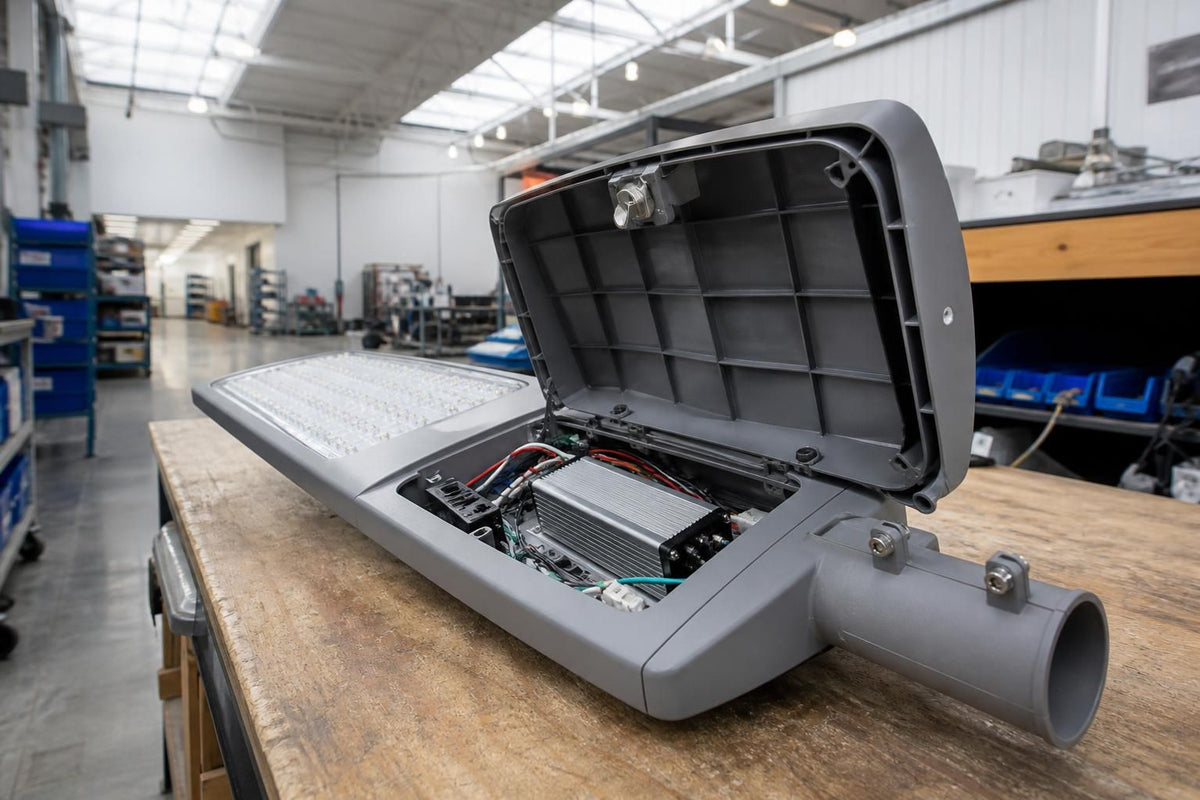
The Hidden Vulnerability of Outdoor LED Installations
Commercial and industrial facility managers face a complex landscape when specifying outdoor lighting. The transition to solid-state illumination delivered significant energy savings and reduced maintenance intervals. Yet a persistent issue remains unaddressed in many specifications. Premature driver failure continues to undermine the long-term value proposition of LED technology. This problem is not caused by poor quality diodes or inadequate thermal management. It stems from electrical transients that travel through the utility grid. These voltage spikes bypass standard circuit breakers and fuse ratings. They reach the sensitive electronics inside the LED driver before protective devices can react. Understanding this failure mode is critical for maintaining uptime and protecting capital investments in 2026.
Outdoor environments expose fixtures to unique electrical hazards. Lightning strikes nearby create massive electromagnetic pulses that induce voltage surges in power lines. Utility switching operations cause momentary but severe voltage spikes. Faulty equipment at the transformer level injects noise into the distribution network. While indoor lighting faces some of these risks, outdoor installations bear the brunt of direct exposure. A wall pack or high bay mounted on an exterior pole has no shielding from atmospheric events. The driver is the first line of defense against power anomalies. When it fails, the entire fixture goes dark. Replacement costs include not only the new unit but also labor for climbing ladders or using lift equipment. Specifying robust LED surge protection outdoor fixture solutions eliminates this recurring expense.
Understanding Transient Voltage Threats
Transient overvoltages occur in microseconds. Standard protective devices cannot respond fast enough to prevent damage to semiconductor components. The Institute of Electrical and Electronics Engineers defines several categories of surges. Category A surges originate from lightning strikes on primary power lines. These events deliver energy levels exceeding 100 kilovolts. Category B surges result from switching heavy loads within the facility or utility network. These are lower in magnitude but occur with much higher frequency. Both types pose serious threats to LED drivers. The electronic ballast inside an LED fixture contains microprocessors and capacitors that are highly sensitive to voltage fluctuations. A single significant spike can degrade internal components over time. This cumulative damage leads to intermittent flickering or complete failure months after the initial event.
Facility managers often assume that building-level surge protection devices provide adequate coverage. This assumption is incorrect for distributed outdoor lighting networks. Point-of-utilization protection is required at each fixture location. The distance between the main service panel and an exterior wall pack can be hundreds of feet. Surge energy attenuates over distance but remains sufficient to damage sensitive electronics. Additionally, ground loops and impedance mismatches in long runs reduce the effectiveness of upstream protectors. Direct integration of surge suppression within or adjacent to the fixture ensures maximum protection. This approach guarantees that the voltage reaching the driver stays within safe operational limits. It also simplifies maintenance by consolidating protection at the source.
Common Causes of Premature Driver Failure
Driver failure manifests in several ways. Total darkness is the most obvious symptom. Intermittent operation indicates partial component degradation. Flickering often precedes complete failure and serves as an early warning sign. Thermal runaway can also contribute to driver issues but is distinct from surge damage. Identifying the root cause requires careful analysis of the failure pattern. If multiple fixtures fail simultaneously after a storm event, surges are likely the culprit. Gradual failures across different zones suggest other factors like overheating or poor ventilation. However, statistical data shows that electrical transients account for a majority of premature LED driver replacements in outdoor applications.
Several specific scenarios accelerate driver wear and tear. Old infrastructure with deteriorating insulation allows leakage currents to interact with surge energy. Improper grounding practices create paths for transient voltage to enter the fixture. Lack of coordination between utility-side and load-side protection leaves gaps in coverage. Even modern grids experience instability due to renewable energy integration and smart grid technologies. These changes introduce new types of harmonics and transients that older equipment was not designed to handle. Specifiers must account for these evolving conditions when selecting components. Choosing a driver with built-in surge immunity ratings above industry standards provides an essential safety margin. This proactive approach prevents costly emergency repairs during peak operating hours.
Specification Criteria for Robust Protection
Selecting the right protection strategy requires attention to technical details. The first consideration is the energy rating of the surge protective device. Measured in joules, this value indicates how much transient energy the device can absorb before failing. Higher ratings provide better longevity and reliability. For outdoor commercial applications, devices rated above 2000 joules are recommended. This ensures protection against severe Category A events without immediate burnout. The second criterion is response time. Faster clamping voltages mean less stress on the downstream driver. Devices with response times under one nanosecond offer superior performance. They divert surge energy away from sensitive electronics before damage occurs.
Integration method also impacts effectiveness. Plug-in adapters are convenient but often lack durability for outdoor use. Hardwired solutions provide more secure connections and better sealing against moisture ingress. When specifying wall packs or other exterior luminaires, look for models with integrated surge protection modules. These units combine the driver and protector in a single enclosure. This design reduces connection points where failures can occur. It also simplifies installation by eliminating separate wiring steps. Ensure that any added protection does not compromise the fixture's ingress protection rating. Moisture combined with electrical faults creates hazardous conditions. Sealed enclosures with appropriate IP ratings maintain performance in rain, snow, and dust. Verify compatibility with existing mounting hardware and pole structures to avoid retrofit complications.
Budgeting for Long-Term Reliability
Capital planning cycles often align with calendar years. As 2026 progresses, facility managers must finalize budgets for upcoming infrastructure projects. Allocating funds for high-quality surge protection yields significant returns over the asset lifecycle. The initial cost difference between standard and protected fixtures is minimal compared to replacement labor and downtime costs. Consider the total cost of ownership rather than just purchase price. A fixture that lasts twenty years without failure outperforms one that requires mid-life driver replacement. Utility rebate programs frequently incentivize energy-efficient upgrades. Some utilities offer additional credits for installing smart controls and protective accessories. Checking local utility websites before finalizing specifications can uncover valuable funding opportunities.
End-of-year spending deadlines create urgency for procurement decisions. Many organizations have use-it-or-lose-it budget provisions that encourage timely purchasing. Delaying orders risks missing out on favorable pricing or availability of key components. Supply chain fluctuations remain a concern in the global market. Securing inventory early ensures project timelines stay on track. Furthermore, delaying upgrades extends exposure to potential surge events. Each storm season brings renewed risk to unprotected assets. Proactive investment in protection mitigates this risk entirely. It also demonstrates fiscal responsibility by preserving asset value and reducing operational expenditures. Specifiers should document these benefits clearly for stakeholders who approve capital requests. Data-driven arguments regarding lifecycle costs resonate strongly with finance teams.
Implementation Strategies for Facility Managers
Successful implementation requires coordination between electrical contractors and lighting designers. Pre-installation surveys identify potential weak points in the power distribution system. Testing existing grounding systems reveals deficiencies that need correction before adding new fixtures. Contractors should verify that all connections meet National Electrical Code requirements. Proper torque settings on terminals prevent loose connections that generate heat and increase susceptibility to surges. Labeling circuits clearly aids future maintenance efforts. Documentation of installed protection devices helps troubleshoot issues quickly. Training maintenance staff on recognizing signs of surge damage prevents minor issues from becoming major failures.
Regular inspection schedules complement physical protection measures. Visual checks for discoloration or swelling around driver housings indicate past electrical stress. Thermal imaging cameras can detect hot spots caused by failing components. Logging failure rates provides data to refine future specifications. If certain zones experience higher failure rates, targeted upgrades may be necessary. Retrofitting older fixtures with aftermarket surge protectors is possible but less ideal than integrated solutions. New installations should prioritize complete systems from reputable manufacturers. Forge Light Co offers comprehensive options that meet rigorous durability standards. Our product lines include advanced protection features as standard equipment in many models.
Leveraging Technology for Enhanced Durability
Modern LED drivers incorporate sophisticated electronics that monitor power quality. Some advanced units communicate with building management systems to report status and fault codes. This connectivity enables predictive maintenance strategies. Instead of waiting for failure, managers can replace components before they cause outages. Smart lighting networks also allow remote dimming and scheduling adjustments. Reducing load during low-traffic periods decreases thermal stress on drivers. Lower temperatures extend component life significantly. Combining smart controls with robust surge protection creates a resilient lighting ecosystem. This integration maximizes efficiency while minimizing risk. As technology advances, expect even greater convergence of control and protection features.
The shift toward IoT-enabled infrastructure presents new opportunities for optimization. Sensors embedded in fixtures can monitor ambient light levels and adjust output dynamically. This reduces unnecessary energy consumption and wear on drivers. Data analytics platforms aggregate information from thousands of points to identify trends. Anomalies in power usage patterns may indicate impending failures or external threats. Early detection allows for swift intervention. Investing in compatible hardware now prepares facilities for future upgrades without requiring complete replacements. Forward-thinking specifications ensure longevity and adaptability in a rapidly changing technological landscape.
Final Recommendations for Specifiers
Protecting outdoor LED investments requires a holistic approach to specification. Focus on total system resilience rather than individual component performance. Prioritize fixtures with high joule ratings and fast response times. Verify compatibility with local utility conditions and grid stability profiles. Plan budgets early to take advantage of rebates and avoid supply chain delays. Document specifications clearly to ensure consistent installation practices. Train maintenance personnel to recognize and address issues promptly. By implementing these strategies, facility managers can extend the life of their lighting assets significantly. Reliable illumination supports safety, security, and productivity in commercial and industrial environments. Do not let surge damage undermine your efficiency gains. Take control of your electrical infrastructure today.
Explore our full range of protected outdoor solutions to find the right fit for your project. Visit our flood lights collection to see how integrated protection enhances durability in high-exposure areas. Contact our specification team for assistance with custom configurations and bulk ordering requirements.
Shop LED lighting at asd-lightingdirect.com or contact us for expert help choosing the right fixtures. All products include a 5 year warranty, and orders over $249 ship free.