
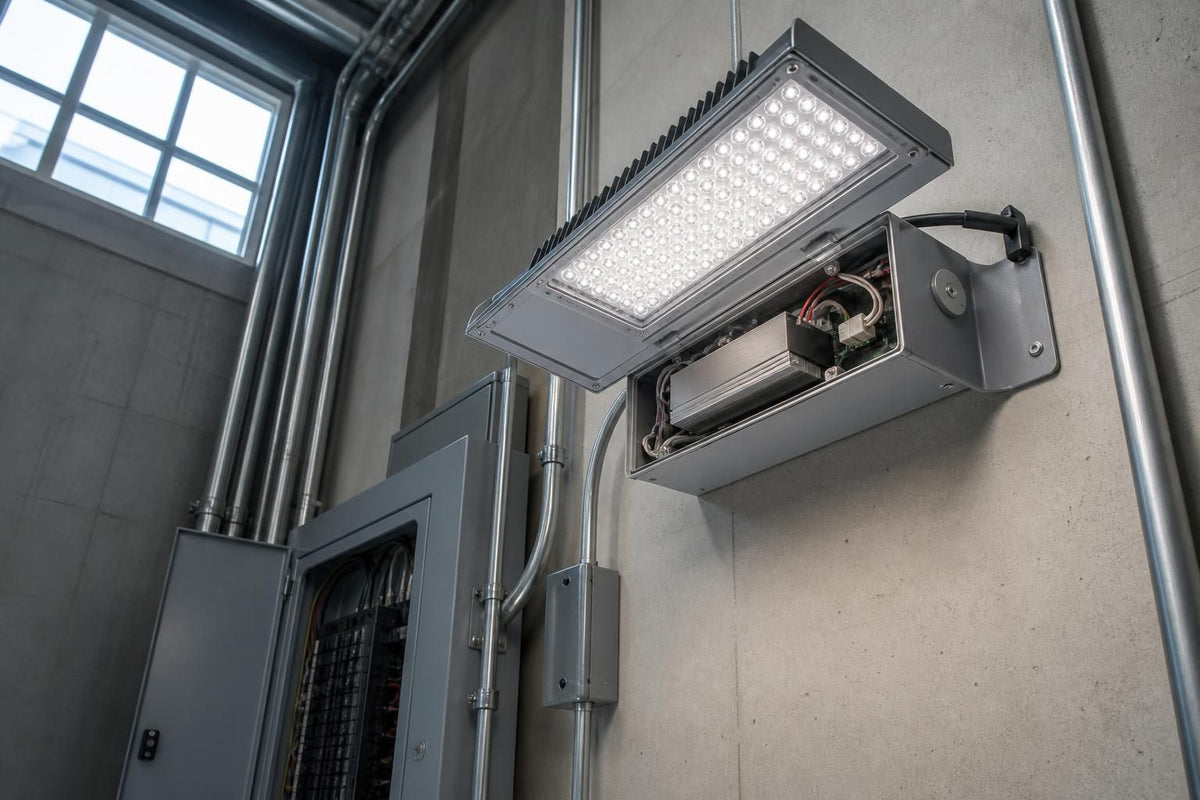
The Hidden Vulnerability of Outdoor LED Systems
Outdoor lighting infrastructure represents a significant capital investment for commercial and industrial facilities. Facility managers and specifiers prioritize lumen output, color temperature consistency, and energy efficiency during the selection process. Attention often focuses on initial performance metrics. Long-term reliability receives less scrutiny until failure occurs. Premature driver failure remains the leading cause of unscheduled maintenance in outdoor LED installations. Voltage spikes from lightning strikes, utility grid switching, or nearby industrial equipment disrupt stable power delivery. These transient events bypass standard circuit breakers. They target the sensitive electronics within the LED driver board.
The modern LED fixture is a system. The optical engine produces light. The thermal management system dissipates heat. The driver converts line voltage to low-voltage DC current. The driver acts as the brain of the fixture. It regulates power flow precisely. A minor voltage anomaly can fry the internal components instantly. Partial damage may reduce efficacy over time. Both scenarios result in dark spaces and increased labor costs for replacement. Understanding the mechanics of surge damage is essential for specifying durable lighting solutions. Proper specification extends asset life significantly.
Anatomy of a Driver Failure Event
Voltage surges manifest in two primary forms. Transient voltage spikes occur rapidly. They last only microseconds. Lightning strikes generate the most severe transients. Inductive load switching within the facility creates smaller but frequent spikes. Sustained overvoltage events last longer. They stress components gradually. Neither type favors standard LED drivers without additional protection. Most commercial LED drivers include basic internal safeguards. These safeguards handle minor fluctuations. They lack the capacity to absorb high-energy discharges.
When a surge hits, it travels through the power lines. It reaches the fixture housing. It enters the driver input terminals. The internal capacitors and semiconductors attempt to regulate the sudden influx of energy. Exceeding their rated threshold causes immediate failure. Components burn out. Connections melt. The fixture goes dark. In some cases, partial damage leads to flickering or dimming. This degradation is often mistaken for normal aging. It is not normal aging. It is cumulative electrical stress. Specifiers must account for the local environment. Areas with frequent thunderstorms require higher protection ratings. Industrial zones with heavy machinery present different risks. The specification must match the threat profile.
Key Specifications for Surge Protection Devices
Selecting the right surge protection device requires attention to specific technical parameters. Generic adapters offer minimal defense. Dedicated external or integrated SPDs provide robust security. The following metrics determine effectiveness.
Energy rating measured in joules indicates capacity. Higher joule ratings absorb more energy before failing. Look for devices rated above 1000 joules for outdoor applications. Clamping voltage defines the threshold for protection. Lower clamping voltages offer better protection but must not interfere with normal operation. Response time matters significantly. Nanosecond response times ensure the spike is diverted before it reaches the driver. Installation method varies by fixture design. Some fixtures integrate SPDs directly into the housing. Others require external inline modules. Integrated solutions save labor hours during installation. External modules allow for easier replacement without removing the entire luminaire.
IP rating compatibility ensures environmental resilience. Outdoor surge protectors must withstand rain, dust, and temperature extremes. An IP65 or higher rating is standard for exterior use. The device should not become a point of failure due to moisture ingress. Compatibility with existing wiring standards prevents integration issues. Verify voltage ratings match the local supply. 120V, 277V, and 480V systems require specific configurations. Mismatched components create safety hazards. Always consult manufacturer datasheets for precise compatibility information.
Integrating Protection into Fixture Selection
Forge Light Co designs fixtures with durability in mind. Our product lines incorporate options that enhance longevity. The LED High Bays collection includes models suitable for harsh industrial environments. These fixtures often operate near heavy machinery and large motors. Such equipment generates significant electrical noise and transient spikes. Selecting a high bay with integrated surge protection or compatible external SPDs mitigates this risk. The MHB series offers robust construction and efficient thermal management. Adding surge protection ensures the driver survives the electrical environment.
Wall packs and area lights face exposure to weather-induced surges. The Wall Packs collection provides versatile mounting options for building perimeters. Perimeter lighting is most vulnerable to lightning strikes on nearby structures or utility poles. Specifying fixtures with enhanced surge tolerance reduces replacement frequency. The MWP wall pack series delivers high lumen output while maintaining a compact footprint. Pairing these fixtures with appropriate Accessory Surge Protectors creates a resilient lighting layer. This approach protects the investment against both environmental and electrical threats.
Linear high bays and roadway lights present unique challenges. Long runs of conduit can act as antennas for electromagnetic interference. The MLH linear high bay series offers uniform light distribution for warehouses and parking structures. Roadway lights like the MRL series illuminate large expanses of asphalt. Both applications benefit from centralized or distributed surge protection strategies. Distributed protection places SPDs closer to each fixture. Centralized protection installs a master unit at the panel level. A hybrid approach often yields the best results. It balances cost with comprehensive coverage.
Budgeting and Rebate Considerations
Year-end planning cycles bring urgency to capital improvement projects. Facility managers review asset conditions and identify necessary replacements. Lighting retrofits often qualify for utility rebates. Many utilities offer incentives for upgrading to high-efficiency LED systems. These programs frequently have strict deadlines. Missing the deadline means losing potential savings. Integrating surge protection into these projects maximizes value. It extends the payback period by reducing maintenance costs. It improves the overall return on investment.
Utility rebate applications require detailed specifications. They often mandate certain performance standards. Including surge protection demonstrates a commitment to long-term reliability. This can strengthen the application narrative. It shows foresight regarding asset lifecycle management. Budget approvals may be easier to obtain when the proposal includes risk mitigation strategies. Dark parking lots pose liability risks. Flickering signs damage brand image. Preventing these issues justifies the upfront cost of protection devices.
Capital budgets allocated for lighting often include contingency funds. These funds cover unexpected repairs. By investing in surge protection, managers reduce the likelihood of drawing from contingency funds. This stability aids financial planning. It allows for more predictable operational expenses. The initial outlay for SPDs is small compared to the cost of emergency labor and fixture replacement. Labor rates continue to rise. Availability of qualified electricians remains tight. Preventative measures ensure continuity of operations. They keep facilities safe and well-lit throughout the year.
Maintenance and Inspection Protocols
Surge protection devices are not set-and-forget components. They require periodic inspection. Visual indicators on many SPDs show status. Green lights indicate proper function. Red lights signal failure or degradation. Regular walkthroughs should include checking these indicators. Maintenance logs must record the condition of protective devices. Replacing failed SPDs promptly prevents driver damage. Delayed replacement leaves fixtures vulnerable.
Testing procedures vary by device type. Some units allow for non-invasive testing. Others require disconnection for verification. Facility managers should establish a schedule that aligns with general lighting maintenance. Combining SPD checks with lens cleaning and mounting hardware inspection saves labor time. Training staff to recognize signs of surge damage is crucial. Unusual flickering or complete outages after storms warrant immediate investigation. Documenting these events helps track patterns. It informs future specification decisions.
Record keeping aids in warranty claims. If a fixture fails despite protection, documentation proves proper care. Manufacturers often require evidence of maintenance for warranty validation. Keeping detailed records protects the facility owner. It ensures accountability across vendors and service providers. This diligence pays dividends during audits or insurance reviews. It demonstrates due diligence in asset management.
Conclusion and Next Steps
Protecting outdoor LED fixtures from voltage surges is a critical component of modern lighting specification. Driver failure remains a primary concern for facility managers. Understanding the causes of premature failure allows for proactive mitigation. Selecting appropriate surge protection devices based on energy ratings, clamping voltage, and environmental resilience ensures long-term reliability. Integrating these protections into fixture selection enhances overall system performance. Forge Light Co offers a comprehensive range of commercial and industrial lighting solutions. Our products are designed to withstand demanding environments.
As you plan your year-end capital improvements, consider the hidden risks of electrical transients. Maximize utility rebate opportunities by specifying robust, protected systems. Reduce long-term maintenance costs with intelligent design choices. Explore our full catalog to find the right fixtures for your facility. Visit our Accessories page to view available surge protection options. Contact our specification team for assistance with complex projects. We provide expert guidance to ensure your lighting investment endures.
Shop LED lighting at asd-lightingdirect.com or contact us for expert help choosing the right fixtures. All products include a 5 year warranty, and orders over $249 ship free.